
Architecture
X-Hub is a Hub-first governed execution architecture. The terminal is not the trust anchor. The Hub keeps routing truth, memory truth, grants, policy, audit, and kill authority together, while X-Terminal turns that control plane into a usable paired product surface.
The Architectural Thesis
Many agent systems collapse prompts, tools, memory, secrets, and side-effect execution into one runtime trust zone. X-Hub takes the opposite position:
- the Hub should own trust, policy, grants, audit, and memory truth
- memory maintenance should stay on a Hub control plane where the user chooses which AI executes memory jobs, rather than turning memory into a terminal-local or plugin-local black box
- paired surfaces should be powerful without silently becoming sovereign runtimes
- thinner clients should be able to consume governed capabilities without inheriting equivalent authority
- external channels should converge through the same control plane before they can influence higher-trust execution
System Shape
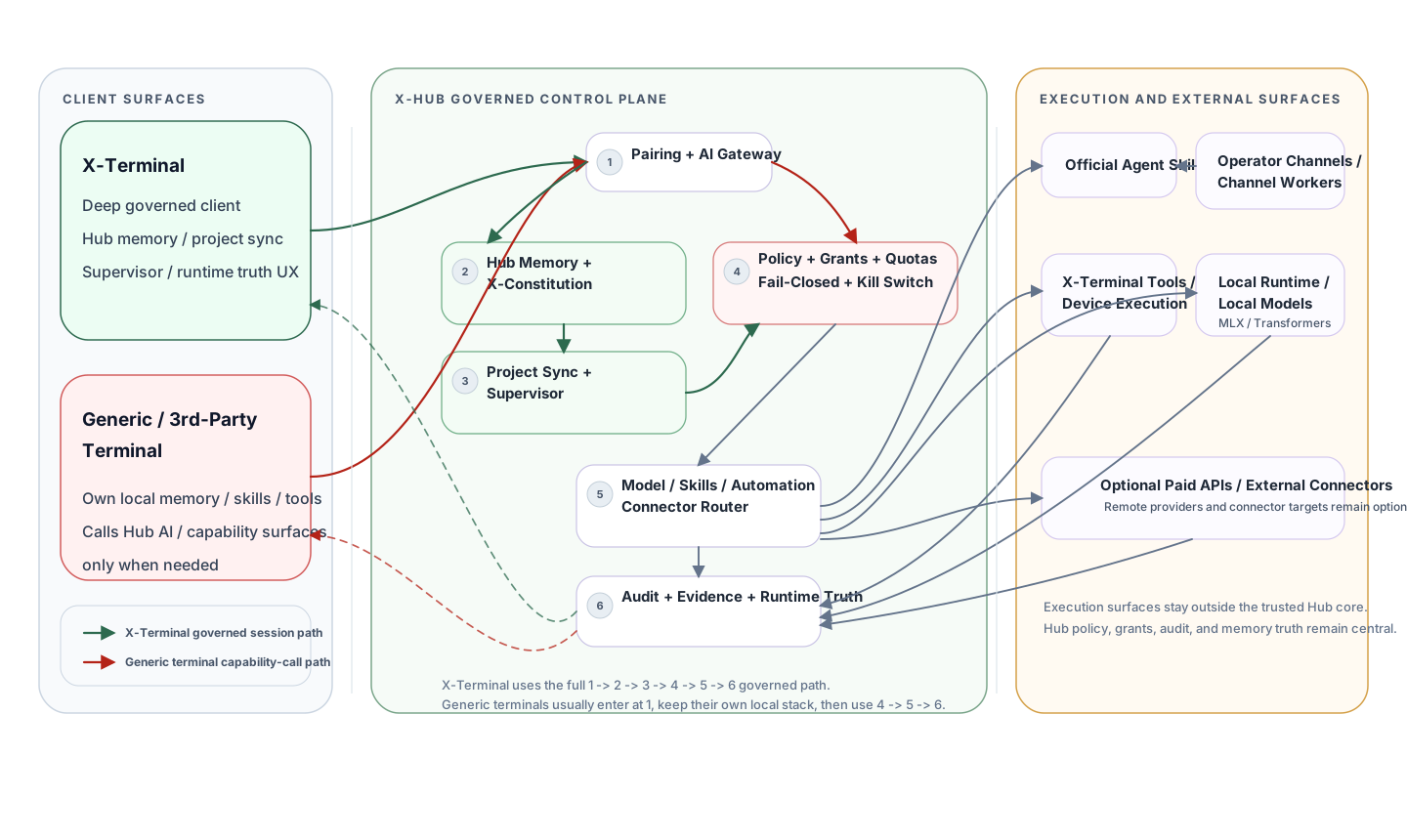
The trust and control plane diagram is meant to show three things:
- X-Terminal follows the deep paired path and is designed as the primary high-trust product surface.
- Generic terminals and other clients can still attach to governed capability surfaces without becoming equivalent trust roots.
- The shared Hub layer is where system truth, policy, authorization, and user control stay anchored.
For memory specifically, the public boundary is intentionally simple:
Memory-Coreis a governed Hub-side rule asset, not an ordinary plugin tier- the user still chooses which AI executes memory jobs in X-Hub
- durable memory truth still terminates through
Writer + Gateinstead of through an arbitrary client or skill runtime
Governed Capability Map
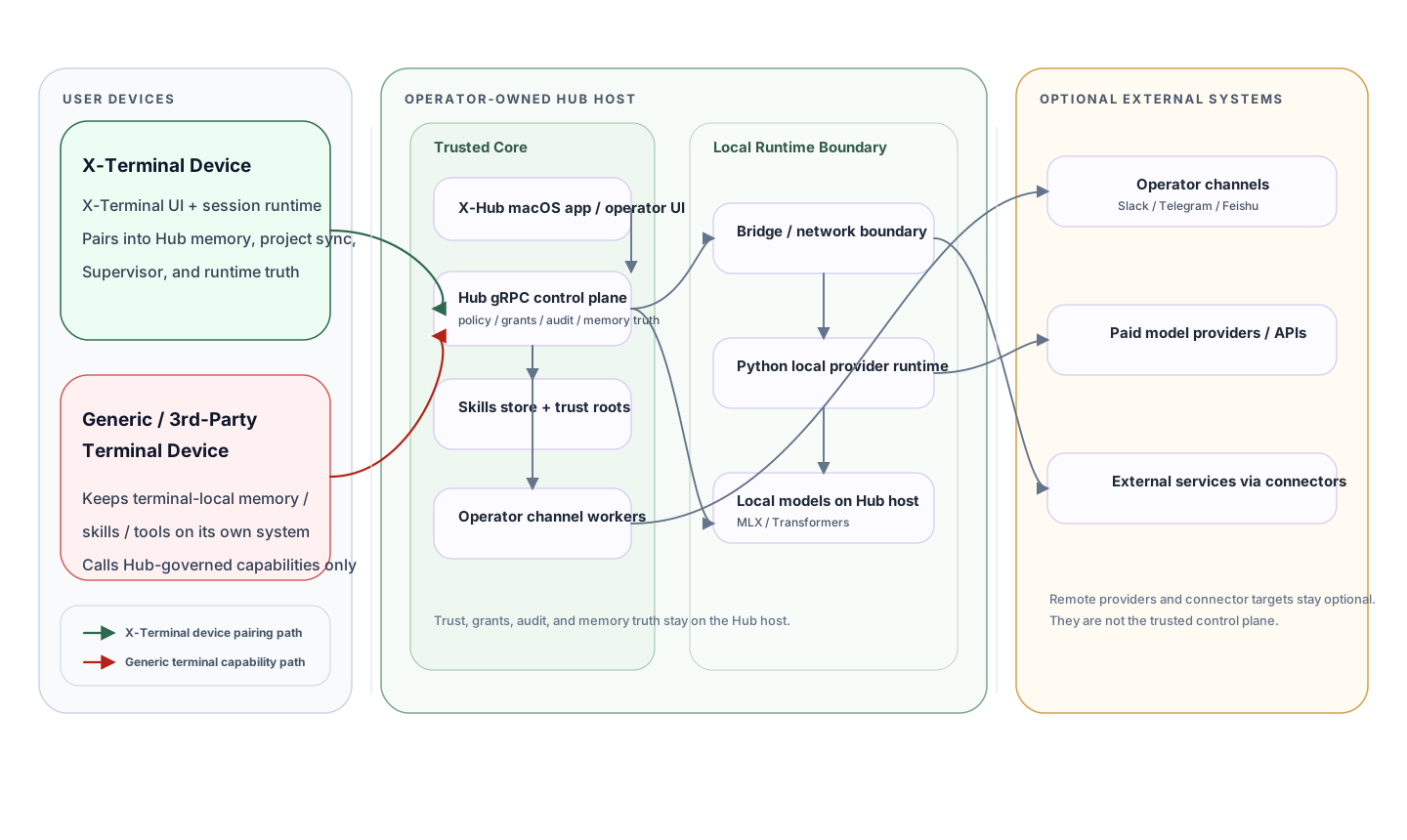
The capability map is intentionally control-plane centered:
- model routing, memory, skills, provider accounts, quotas, terminal execution, channels, Supervisor state, and audit can converge through one Hub authority
- local and remote runtime surfaces remain attached boundaries rather than hidden replacement control planes
- cloud services can be used, but they do not have to become the place where policy or runtime truth lives
- implementation details can evolve while the authority boundary stays legible
Surface Roles
| Surface | Role in the architecture |
|---|---|
| Hub | Control plane for trust, routing, memory truth, authorization, and audit |
| X-Terminal | Deep paired product surface for governed interaction, supervision, and operator visibility |
| Generic terminal / third-party client | Thin capability consumer that can attach to governed surfaces without inheriting the full trust boundary |
| External services and runtimes | Optional execution or inference surfaces that remain subordinate to the user-owned control plane |
This separation matters because it lets the system expose rich product UX where it is useful, without forcing every surface to become the place where final authority resides.
Public Design Principles
- Keep the trust anchor in the Hub rather than in the terminal, plugin bundle, or vendor default.
- Allow strong paired product surfaces without collapsing trust into the UI.
- Let local and remote execution paths coexist under one user-controlled plane.
- Make external ingress converge before it can influence higher-trust execution.
- Keep the architecture legible enough that operators can reason about where authority actually lives.
Why This Shape Matters
This structure is what makes the rest of X-Hub possible:
- governed autonomy without unsupervised sprawl
- local-first operation without giving up policy and audit
- operator-channel ingress without creating shadow authority paths
- reusable skills without plugin roulette
- multimodal supervision without fragmenting memory and runtime truth